

DinosanPROMOTIONS
Back to Field Notes
Travel in Japan

Hotels, Ryokan, and Accommodation in Japan: Booking, Check-In, and Stay Basics

August 6, 2026•Updated: 2026-08-06•READY•9 min read

SUMMARY

A practical visitor guide to booking, checking in, and staying at hotels, traditional ryokan, hostels, and licensed private lodgings in Japan. Learn passport rules for foreign guests without a Japanese address, local accommodation taxes, ryokan etiquette, and luggage coordination.

Hotels, Ryokan, and Accommodation in Japan: Booking, Check-In, and Stay Basics

1. Accommodation Types in Japan: Western Hotels, Ryokan, Hostels, and Minpaku

Japan offers diverse lodging choices ranging from Western-style business and luxury hotels to traditional Japanese inns (ryokan), budget hostels, and licensed private lodgings (Minpaku). Each property type follows distinct guest service norms, bedding styles (futon vs bed), and facility rules.

2. Booking Rules, Check-In/Out Hours, and Property Terms

Standard check-in hours typically begin between 3:00 PM and 4:00 PM, while check-out is often scheduled between 10:00 AM and 11:00 AM. Always review property-specific cancellation charge schedules, deposit requirements, and late-arrival policies before confirming your reservation.

3. Passport Information for Foreign Guests Without an Address in Japan

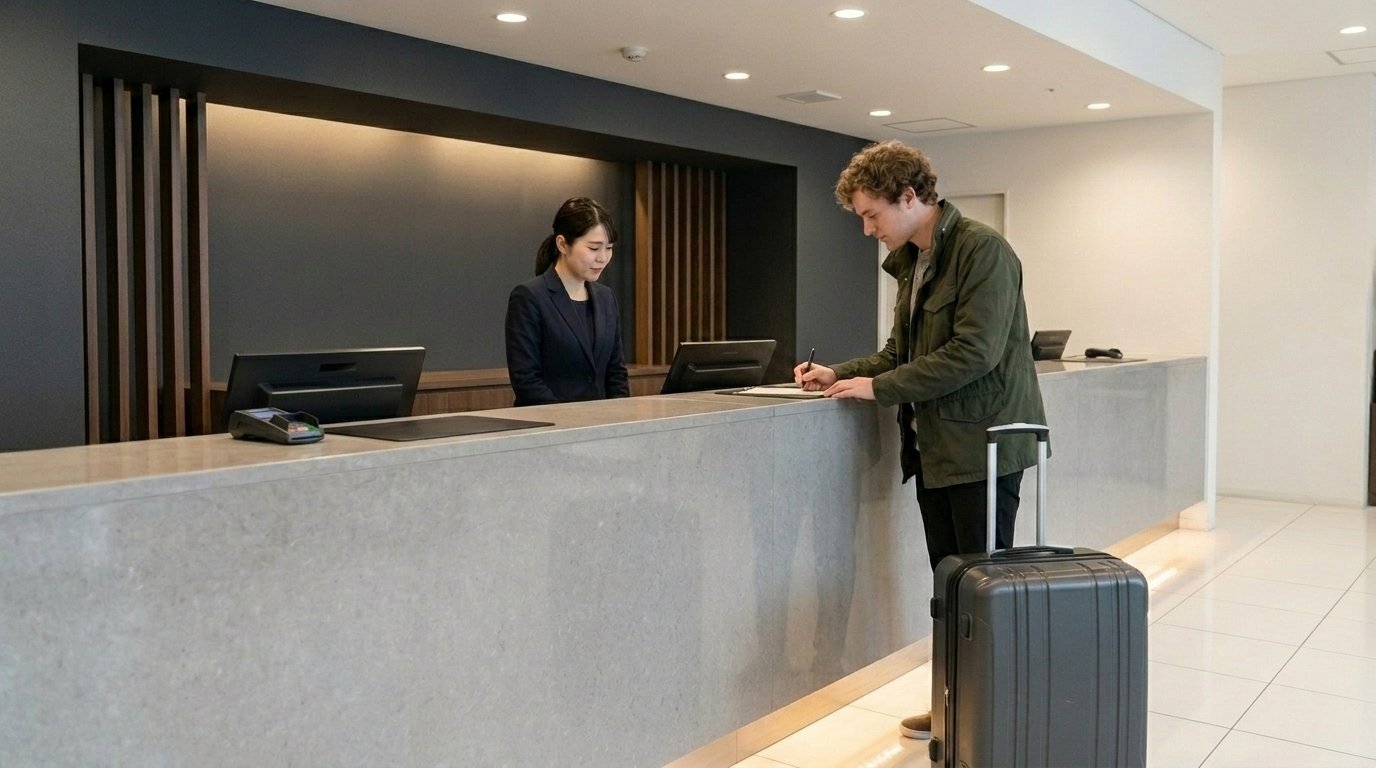
Under Japanese Ministry of Health, Labour and Welfare regulations implementing the Inns and Hotels Act, foreign guests who do not hold a residential address in Japan are required to present their passport upon check-in and permit front desk staff to copy the identification page for official registry records.

4. Municipal and Prefectural Accommodation Taxes

Certain municipalities and prefectures—including Tokyo, Kyoto, and Osaka—levy a local accommodation tax based on the per-person room charge per night. Accommodation taxes are not a uniform national tax; rates vary locally and are paid directly at check-in or check-out.

5. Traditional Ryokan Customs: Shoes, Yukata, Onsen Baths, and Kaiseki Meals

Staying at a traditional ryokan involves unique customs: removing street shoes at the entryway (Genkan), wearing provided slippers in wooden corridors, stepping onto tatami mats with bare feet or socks, wearing yukata robes in designated areas, and observing served dining schedules.

6. Coordinating Luggage Storage and Takkyubin Forwarding at Accommodation

Full-service hotels and ryokan often store guest luggage before check-in or after check-out on the day of arrival or departure. Front desks can also accept incoming forwarded luggage (Takkyubin) if arranged with your booking name and check-in date clearly stated on the waybill.

7. Room Manners, Quiet Hours, and Late Arrival Notifications

Respect quiet hours in corridors and wooden ryokan rooms after 10:00 PM. If your transit is delayed past your estimated check-in time—especially at smaller inns or ryokan where dinner preparation is timed—always telephone or message the front desk in advance.

8. Special Requests: Children, Accessibility, and Dietary Needs

Inform properties in advance regarding child co-sleeping rules, elevator/stair accessibility requirements, or specific food allergies for included meal plans. Early communication allows ryokan chefs and hotel staff to prepare suitable accommodations.

📢

EDITORIAL NOTE & DRAFT STATUS

This information is reviewed periodically. If service or product links are added in the future, they will be published only after availability and editorial checks.

Administrative Information Notice

This guide provides practical educational orientation for booking and staying at accommodation facilities in Japan. Identity verification rules, check-in and check-out windows, cancellation penalties, luggage holding options, and room amenities depend on individual property regulations. Under Ministry of Health, Labour and Welfare guidelines, foreign guests without a residential address in Japan are requested to present their passport for identification and copying. Local accommodation taxes are enacted individually by specific municipalities (such as Tokyo, Kyoto, and Osaka) based on room rates; they are not a uniform national tax. Travelers should confirm current check-in policies, tax obligations, and property terms directly with their accommodation provider prior to travel.

OFFICIAL SOURCES & PRIMARY PORTALS

RELATED FIELD NOTES

Start in Japan

Arriving at a Japanese Airport: Immigration, Baggage, Transfers, and First Transport

A comprehensive arrival guide for Narita, Haneda, Kansai, and major Japanese airports. Learn about immigration queues, baggage claim, customs clearance, transit options, baggage forwarding, and late-arrival logistics.

9 min read→
Travel in Japan

Luggage Forwarding, Lockers, and Storage in Japan: A Practical Visitor Guide

A practical guide to luggage forwarding, station coin lockers, and baggage storage counters in Japan. Learn how airport-to-hotel delivery works, lead times, size/weight restrictions, destination forms, train coordination, and damage/loss procedures.

9 min read→
Start Here

First Week in Japan: Practical Setup Guide for Daily Life

A practical Dinosan guide to the first week in Japan, covering connectivity, payments, trains, convenience stores, documents, weather, and daily setup.

9 min read→
Home & Living

Japanese Travel Packing and Overnight Bag Setup Guide: Short Trips, Hotels, and Everyday Essentials

Learn how to pack efficiently for travel and short trips in Japan. Understand overnight duffel bags, clothing compression cubes, hanging toiletries, and laundry bag separation.

7 min read→
Travel in Japan

Onsen and Sento in Japan: Bathing Etiquette, Tattoos, and Visitor Basics

A practical guide to Japanese hot springs (onsen) and public bathhouses (sento). Learn step-by-step bathing etiquette, washing rules, tattoo policies, private bath options, and health precautions.

9 min read→