

1. Understanding Railway Operators: JR, Private Lines, Subways, and Buses
Japan’s rail network is divided into Japan Railways (JR Group companies like JR East, JR Central, JR West), private railway companies (e.g., Keio, Odakyu, Hankyu), and municipal subway lines (e.g., Tokyo Metro, Toei Subway, Osaka Metro). Each operator manages its own stations and fare gates.
2. Navigation Apps and Verifying Operator Platforms Before Transferring
Modern transit apps (such as Japan Travel by NAVITIME, Google Maps, or Jorudan) display exact line names, platform numbers, transfer times, and carriage recommendations. Checking whether a transfer is inside the same station gates or requires walking outside to a separate operator station prevents lost time.
3. IC Cards vs. Paper Tickets and Mobile Pass Options
Rechargeable IC cards (Suica, Pasmo, Icoca, Welcome Suica, etc.) or smartphone wallet passes work across almost all urban trains, subways, and city buses. Paper tickets are required for express surcharges, specific discount passes, or stations without IC card reader gates.
4. Navigating Ticket Gates, Transfer Barriers, and Station Signs
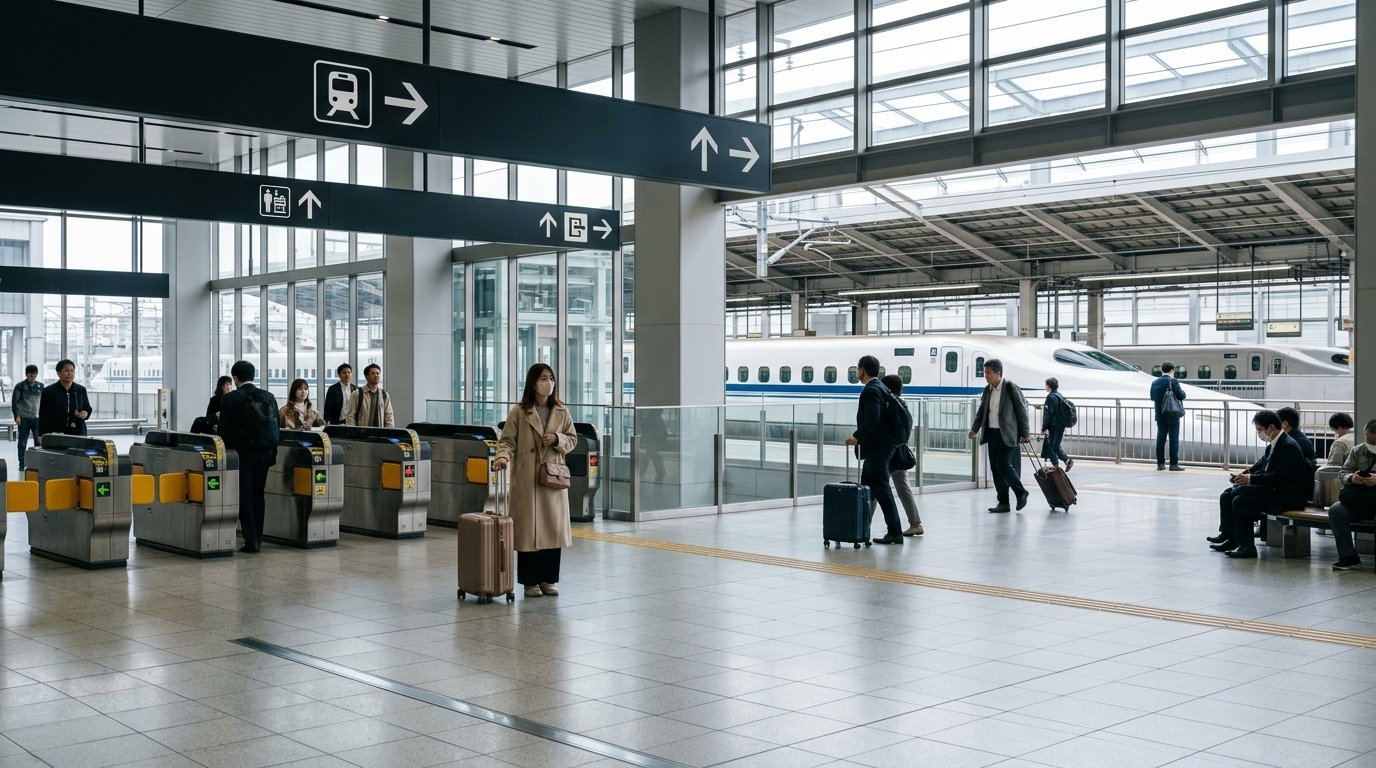
Pass through automatic ticket gates by tapping your IC card on the glowing IC reader or inserting your paper ticket into the slot (remember to retrieve your ticket on the other side!). Follow color-coded overhead signage and exit codes (e.g., Exit A1, East Exit) to reach your destination smoothly.
5. Shinkansen Seating: Reserved, Non-Reserved, Green Car, and Booking
Shinkansen (bullet trains) feature non-reserved cars (unreserved seating on a first-come basis), reserved cars (assigned seat numbers), and spacious Green Cars (first-class). Booking tickets in advance via official reservation portals (such as SmartEX or JR-WEST Online Train Reservation) or station ticket offices (Midori-no-Madoguchi) ensures seat availability.
6. Large and Oversized Baggage Rules on Bullet Trains
On major Shinkansen lines (Tokaido, Sanyo, Kyushu, and Nishi-Kyushu), luggage with total dimensions (length + width + height) between 160cm and 250cm requires a seat reservation with an oversized baggage area. Bringing oversized bags without a reservation incurs a fee and assignment to a designated area.
7. Handling Delays, Service Disruptions, and Last-Train Safety Margins
While Japanese trains are exceptionally punctual, weather or technical incidents can cause delays. Station monitors display delay notices, and delay certificates (Densha Chien Shomeisho) can be obtained online or at ticket counters. Always check last-train (Shuden) schedules when traveling at night, as urban trains generally cease operations around midnight to 1:00 AM.
8. Station Accessibility, Priority Seating, and Train Etiquette
Stations provide elevators, ramps, and station staff assistance for wheelchair users and strollers. Train etiquette in Japan emphasizes keeping mobile phones on silent mode (Manner Mode), refraining from phone calls inside carriages, keeping voices low, and yielding priority seats to elderly, pregnant, or injured passengers.
EDITORIAL NOTE & DRAFT STATUS
This information is reviewed periodically. If service or product links are added in the future, they will be published only after availability and editorial checks.