

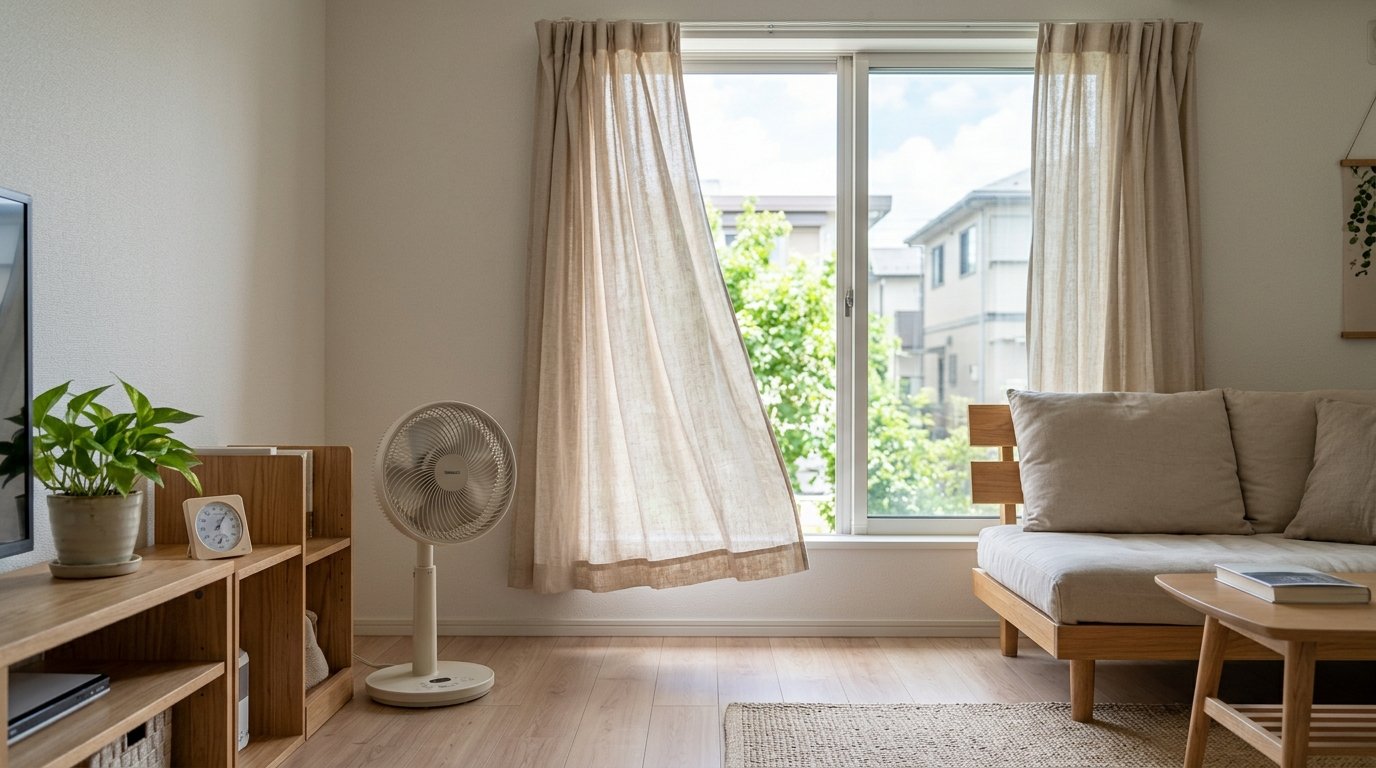
1. Mapping Airflow Vectors in Compact Rooms
Opening only one window does not create effective ventilation. Creating an airflow path by opening two windows diagonally ensures fresh outdoor air pushes stale indoor air out.
2. Placing Circulators for Maximum Exchange
Without active circulation, air pockets remain stagnant. Placing a compact 3D air circulator pointing toward windows or corners accelerates ventilation and enhances air-conditioning.
3. screen Maintenance for Fresh Inflow
Dirty window screens contaminate clean incoming air. Brushing screens regularly with double-sided rollers removes black dust and pollen, ensuring clean ventilation paths.
4. Charcoal and Bio Odor Absorbers
Artificial fragrances mask odors but do not clear them. Relying on bamboo charcoal absorber packs and bio gel neutralizes odors safely, creating clean room freshness.
5. Blocking Drafts with Flexible Door Seals
Gaps under doors allow drafty air and corridor dust in. Installing flexible door draft stoppers blocks hallway winds and prevents odors from travelling between rooms.
6. Sourcing Air and Ventilation Accessories
Ventilation helpers are accessible. While 100-yen stores offer excellent charcoal odor packs and draft tapes, multi-directional 3D circulators should be bought at electronics retailers.
7. Connection to Living Room Dehumidification
Ventilation setups work alongside main climate controls. Linking airing routines with dehumidifier usage protects wooden tatami floors and closets from moisture damage.
EDITORIAL NOTE & DRAFT STATUS
This article is an editorial framework and guide. In accordance with our editorial standards, links will be added after availability and editorial checks.