

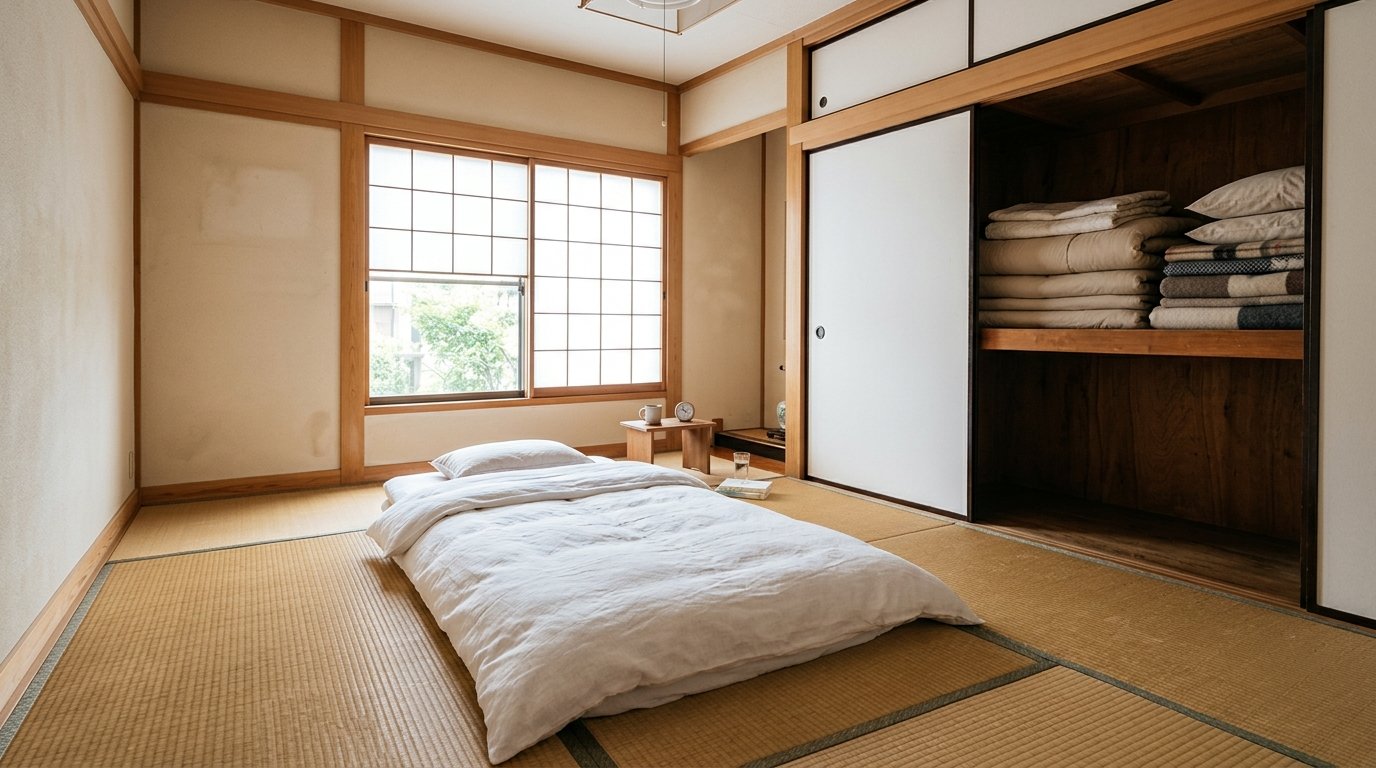
1. Futons and Floor-Based Bedding Systems
Floor-based futon setups are highly practical. Choosing a supportive mattress topper or shikibuton layer provides comfortable rest while allowing the room space to be reclaimed during the day.
2. Under-Bedding Moisture and Humidity Management
Sleeping directly on floors can trap heat and humidity. Placing a dehumidifier under-sheet or using a compact slatted mat elevates the bedding, supporting air flow and helping reduce moisture build-up.
3. Daily Airing and Futon Dryer Routines
Bedding requires regular airing to stay fresh. Hanging futons on balcony rails or using a portable hot-air futon dryer indoors helps dry the fibers and manage everyday hygiene.
4. Washable Covers and Maintenance Ease
Bedding covers collect dust and perspiration. Using machine-washable covers that are easy to unzip and dry quickly supports simple, stress-free upkeep routines.
5. Seasonal Adjustments for Summer and Winter
Bedding needs change with the seasons in Japan. Using light towelkets or cool-touch sheets helps manage summer humidity, while winter duvets provide insulation during colder months.
6. Closet and Oshiire Storage Organization
Storing bedding properly keeps the room uncluttered. Placing folded futons in breathable fabric storage bags protects them from dust while utilizing oshiire shelving efficiently.
7. Connection to Household Lifestyle Systems
This sleep environment setup guide connects with our Small Space Storage Framework and Trash Sorting Framework, forming a tidy household ecosystem.
EDITORIAL NOTE & DRAFT STATUS
This article is an editorial framework and guide. In accordance with our editorial standards, links will be added after availability and editorial checks.