

1. Daily Bento Routines in Japanese Life
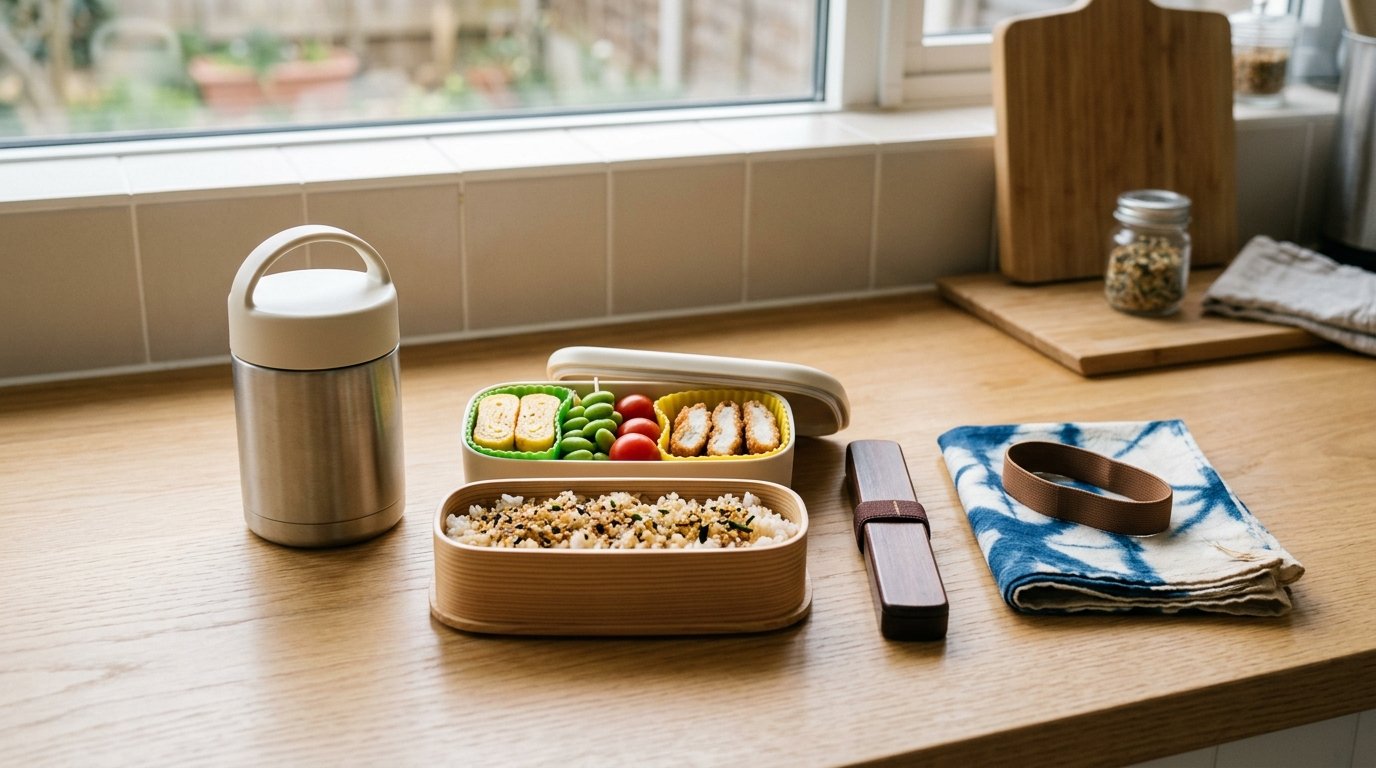
Packing a bento lunch creates a repeatable carry routine for work or school. Choosing compact containers with seal-conscious features and an organized packing sequence can make morning preparation easier.
2. Selecting Seal-Conscious Bento Containers
Choose food containers with flexible gaskets and locking latches designed to help reduce accidental liquid seepage. Always follow container assembly and care instructions.
3. Using Vacuum Insulated Thermal Food Jars
Vacuum insulated soup jars help keep hot soups or stews warm. Follow manufacturer instructions for pre-heating and safe food storage durations.
4. Organizing Food Items with Reusable Silicone Dividers
Reusable silicone cups helps keep food portions separated during carrying. They fit easily into square or oval container tiers to keep meals organized.
5. Securing Lunch Boxes with Furoshiki Wraps and Tote Bags
Wrapping bento boxes in a cotton cloth holds lids securely in place. Placing the wrapped box inside a lined tote bag adds an insulated carrying layer during transit.
6. Sourcing Lunchware Accessories in Japan
High-performance insulated soup jars and branded bento boxes are available at department stores or home centers, while silicone cups, chopstick cases, and lunch totes abound at 100-yen stores.
7. Connection to Meal Prep and Kitchen Storage Systems
This bento packing guide integrates smoothly with our grocery meal prep storage and kitchen sink dishwashing setups, keeping container washing and morning packing streamlined.
EDITORIAL NOTE & DRAFT STATUS
This article is an editorial framework and guide. In accordance with our editorial standards, links will be added after availability and editorial checks.