

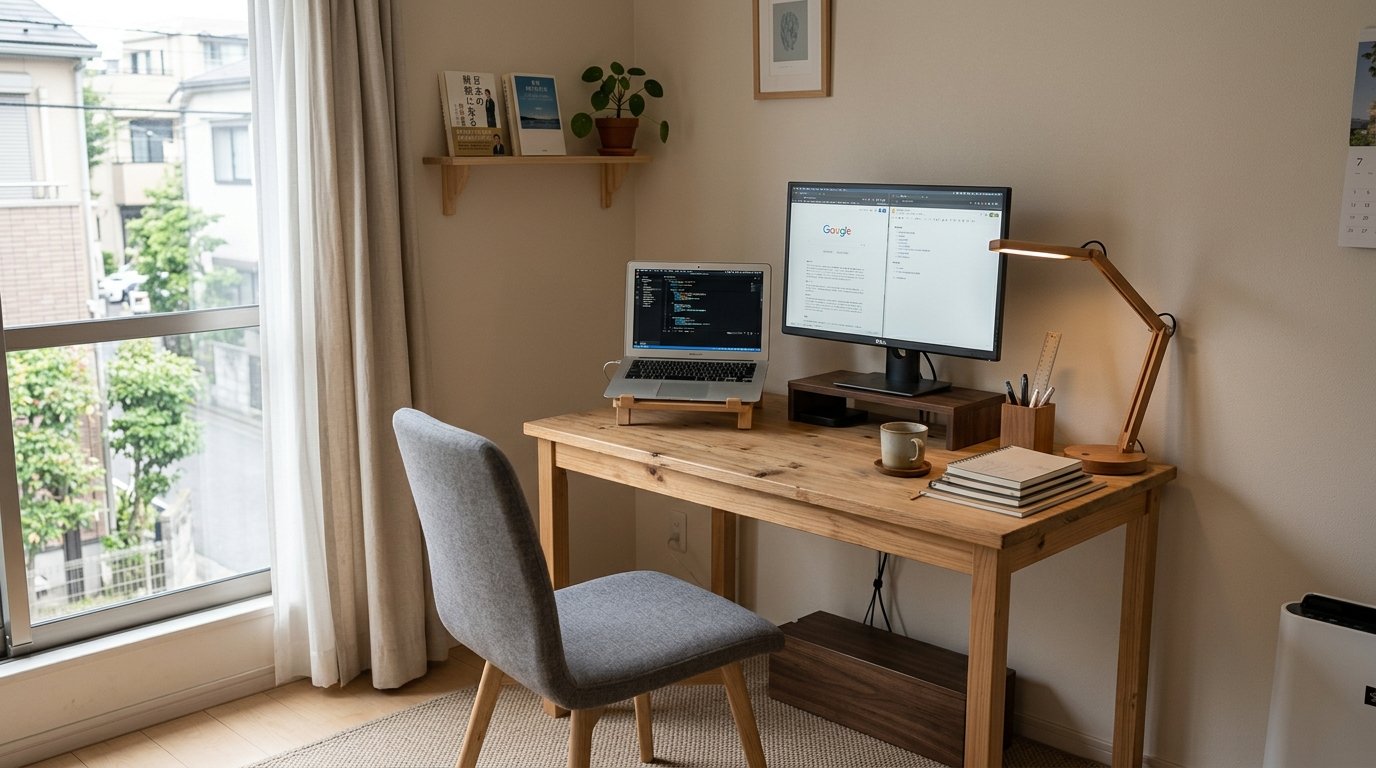
1. Compact Desks and Corner Layouts
Placing a desk in a multi-use room requires footprint efficiency. Selecting a foldable wooden writing desk allows the workspace to be cleared when not in use, supporting layout flexibility.
2. Everyday Sitting Comfort and Posture Support
Sitting for extended work hours can stress the back. Placing a memory foam seat cushion on your chair supports natural spine alignment, helping manage muscle tension during screen routines.
3. Screen Elevation and Laptop Stands
Looking down at a laptop screen can cause neck strain. Using an adjustable aluminum laptop riser stand elevates the screen to eye level, supporting a comfortable viewing posture.
4. Under-Desk Cable Trays and Decluttering
Cables trailing on the floor get tangled and gather dust. Installing a clamp-on cable management tray under the desk holds power strips and chargers tidy, supporting clean baseboard spaces.
5. Desktop Document Trays and Day-End Reset
Paper clutter on tabletop surfaces reduces focus. Utilizing stackable A4 document trays and resetting the desk to a clean state at the end of the day supports a clear transition to home relaxation.
6. Sourcing Functional Workspace Gear
Foldable desks, seat cushions, and laptop stands are widely available at Nitori, Cainz, or online marketplaces like Amazon Japan. Prioritize sturdy materials and simple clamp designs.
7. Connection to Household Infrastructure
This workstation layout directly integrates with our Lighting and Power Setup Framework, organizing plugs, power strips, and clamp desk lamps safely.
EDITORIAL NOTE & DRAFT STATUS
This article is an editorial framework and guide. In accordance with our editorial standards, links will be added after availability and editorial checks.