

1. Cleaning in Japanese Apartments
Starting a cleaning routine in a new Japanese apartment involves understanding specialized materials, ventilation flows, and localized tools. Adapting to small dimensions and high seasonal humidity keeps your living environment fresh without excess effort.
2. The Humidity Challenge and Mold Prevention Basics
High humidity in Japan, especially during summer and rainy seasons, makes moisture management a central part of home maintenance. Focus on physical airflow, keeping bathroom vents running continuously, and wiping condensation off windows regularly rather than relying only on chemical sprays.
3. Bathroom Routine: Vents, Screens, and Wet Areas
Many Japanese bathrooms function as complete wet rooms. Running the exhaust vent continuously is a common baseline. Wiping down wall surfaces after showers and utilizing basic physical tools helps support cleanliness as part of a regular routine.
4. Drain Maintenance and Hair Catchers
Bathroom and kitchen drains in compact apartments accumulate grime and hair quickly. Placing net filters or disposable hair catchers over drain caps makes disposal simple and helps reduce the risk of drain blockage. Daily disposal of these filters keeps drains flowing smoothly.
5. Kitchen Care: Grease and Sink Habits
Small kitchen counters require tidy setups. Using small, specialized cleaning sheets for induction stove tops or gas grates immediately after cooking helps manage grease build-up. Keeping sink surfaces dry between meals helps reduce water spots and pest attraction.
6. Floor Care: Tatami Mats vs. Wood Laminate Floors
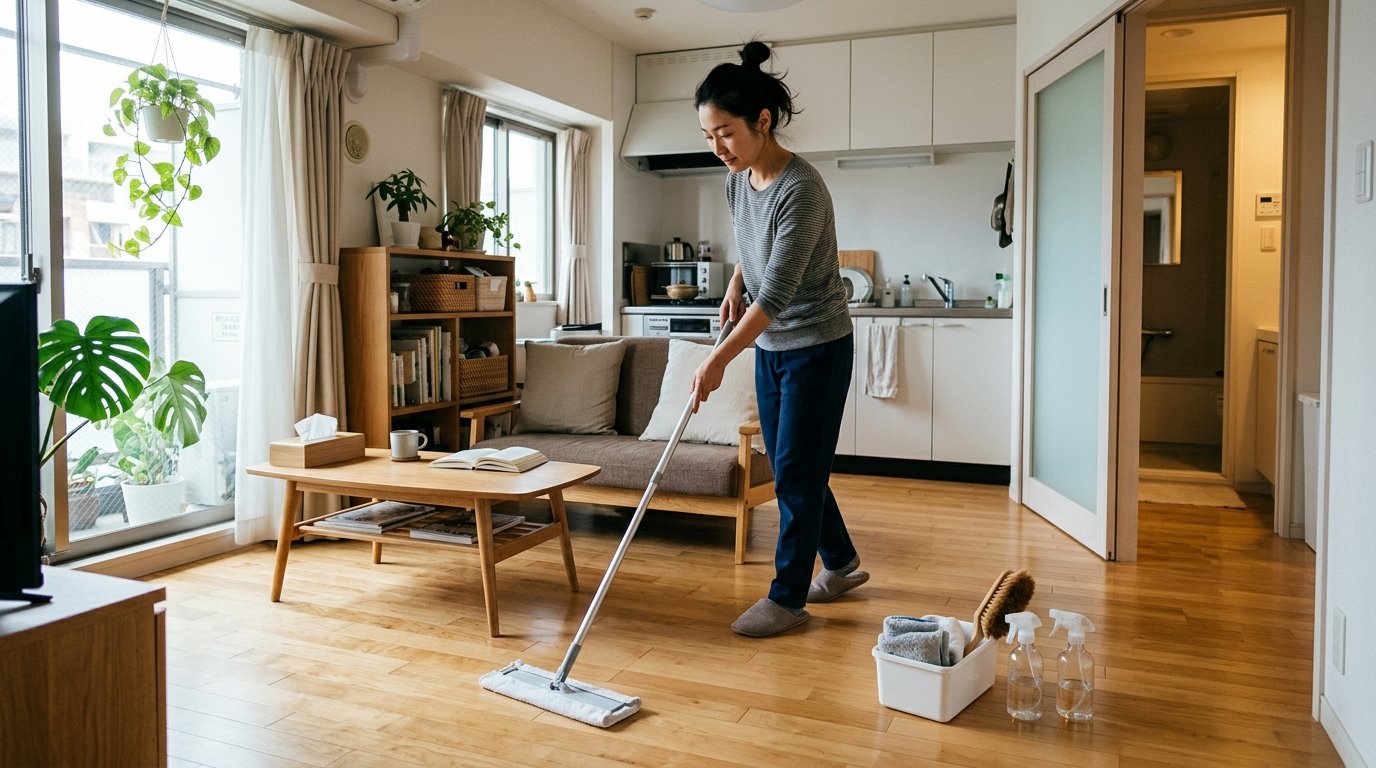
Modern apartments use wood laminate, while older ones may have straw tatami mats. Tatami should be vacuumed gently along the weave and never wiped with wet cloths. For laminate floors, a simple flat wiper with dry or damp electrostatic sheets keeps dust managed.
7. Toilet Cleaning: Easy Daily Habits
Keeping the toilet clean involves quick, regular checkups. Disposable toilet wipes, foaming bowl cleansers, and simple brush systems are easily found at any drugstore. Implementing a brief daily wipe-down helps reduce deeper grime buildup and supports weekly cleaning routines.
8. Genkan Entryway Habits and Dust Control
The genkan entryway serves as the transition between outdoor dirt and indoor living. Removing shoes immediately is a universal cultural rule. Sweeping the lower entryway tiles regularly helps reduce how much outdoor dust travels into the living area.
9. Where to Shop: Drugstores, 100-Yen Stores, and Amazon Japan
Japanese retail offer a massive selection of cleaning tools. Local 100-yen shops are excellent for disposable hair catchers, sponges, and simple hooks. Neighborhood drugstores supply specialized sprays, sheets, and refills at budget-friendly rates.
10. Building a Compact Cleaning Toolkit
Avoid buying oversized equipment. A compact cleaning toolkit should consist of a flat floor wiper, microfiber cloths, a few multipurpose cleaning sheets, and small airtight storage boxes. Keeping tools compact makes them easy to store inside small apartment closets.
11. Crucial Safety Disclaimers for Cleaning Products
Do not mix acidic and chlorine-based cleaning products, as this generates toxic gas. Always ensure adequate ventilation by opening windows or running exhaust fans when using chemical sprays, and follow all safety instructions on product labels.
12. Connection to the Home Cleaning Basics Framework
This practical daily guide forms the baseline for our Home Cleaning Basics Framework (and the Japanese お掃除基本フレームワーク). Our curated slots evaluate simple non-prescription tools, wipe stands, and humidity control accessories under active review.
EDITORIAL NOTE & DRAFT STATUS
This article is an editorial framework and guide. In accordance with our editorial standards, links will be added after availability and editorial checks.