

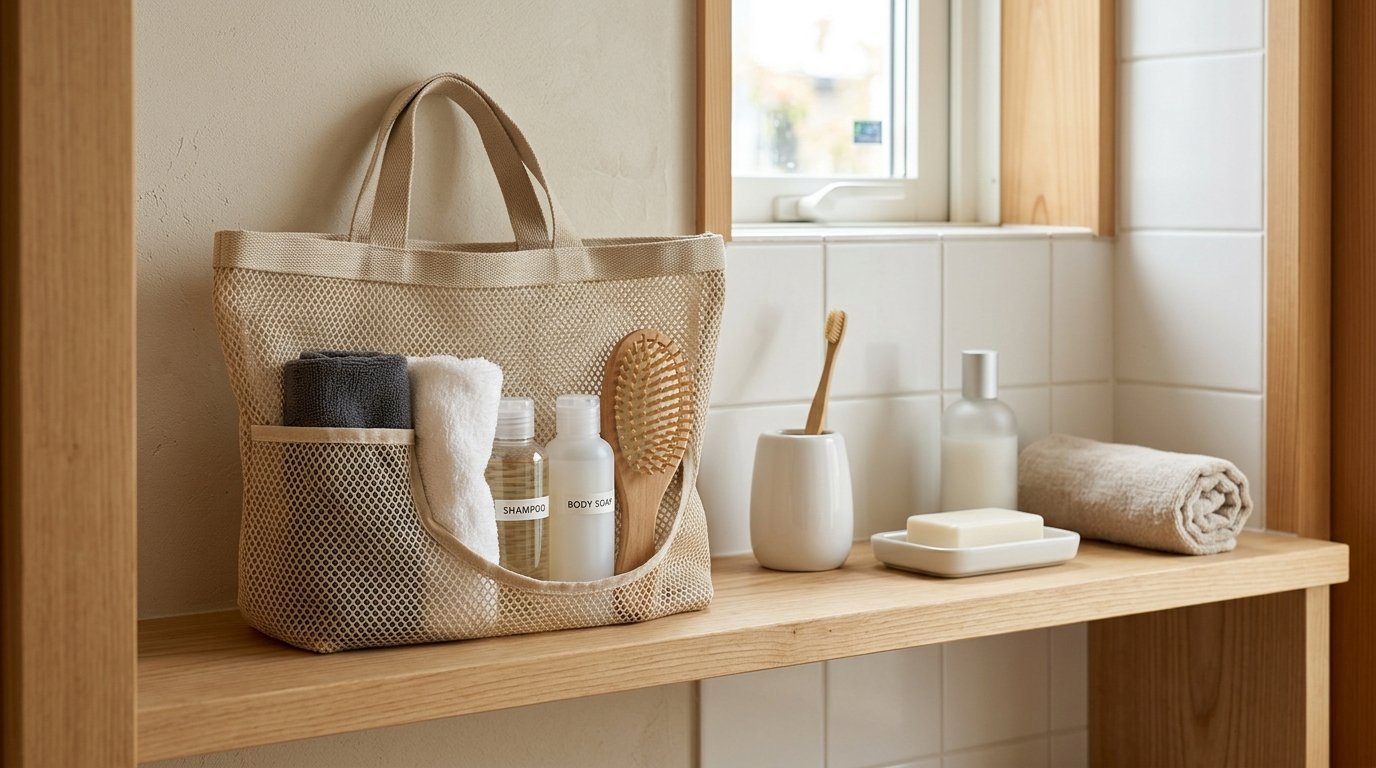
1. Japanese Public Bath Etiquette Basics
Visiting Japanese public baths (sento) or hot springs (onsen) requires adhering to shared guidelines. Bringing a dedicated bath caddy bag makes it easy to manage toiletries while respecting communal hygiene rules. For a dedicated guide on bathing entry flows, tattoo policies, and safety rules, see our onsen and sento etiquette guide.
2. Spas and Mesh Bag Drainage
Bath bags inevitably get wet inside washing areas. Choosing a double-layer mesh bag with comprehensive bottom drainage prevents mold growth and allows quick air-drying of your shampoo bottles.
3. Leakproof Containers for Shampoo Stocks
Fluctuating temperatures and bag movement can cause liquid cosmetics to spill. Storing shampoos and face washes in leakproof, squeezable silicone travel bottles keeps your main gear bag dry.
4. Compact Waffle Towels for Mobility
Standard cotton bath towels are heavy and slow to dry on the go. Waffle-weave microfiber towels compress into minimal space and dry rapidly after being wrung out, keeping your bag light.
5. Travel Soap Cases and moisture Controls
Wet solid soap bars turn mushy inside standard airtight plastic travel cases. Choosing a case with an integrated diatomaceous sheet absorbs excess moisture, keeping the soap firm and dry.
6. Sourcing Bath and Spa Accessories
Microfiber towels and specialized leakproof silicone bottles are available at CAINZ or outdoor retailers, while mesh caddies, soap cases, and travel pouches are abundant at 100-yen stores.
7. Connection to Daily Carry Commuting
This public bath kit pairs with our Daily Carry and Commuting Framework, allowing you to slide a compact, waterproof bath pouch into your daily commuter bag for after-work spa visits.
EDITORIAL NOTE & DRAFT STATUS
This article is an editorial framework and guide. In accordance with our editorial standards, links will be added after availability and editorial checks.