

1. Everyday Tableware Layout Basics
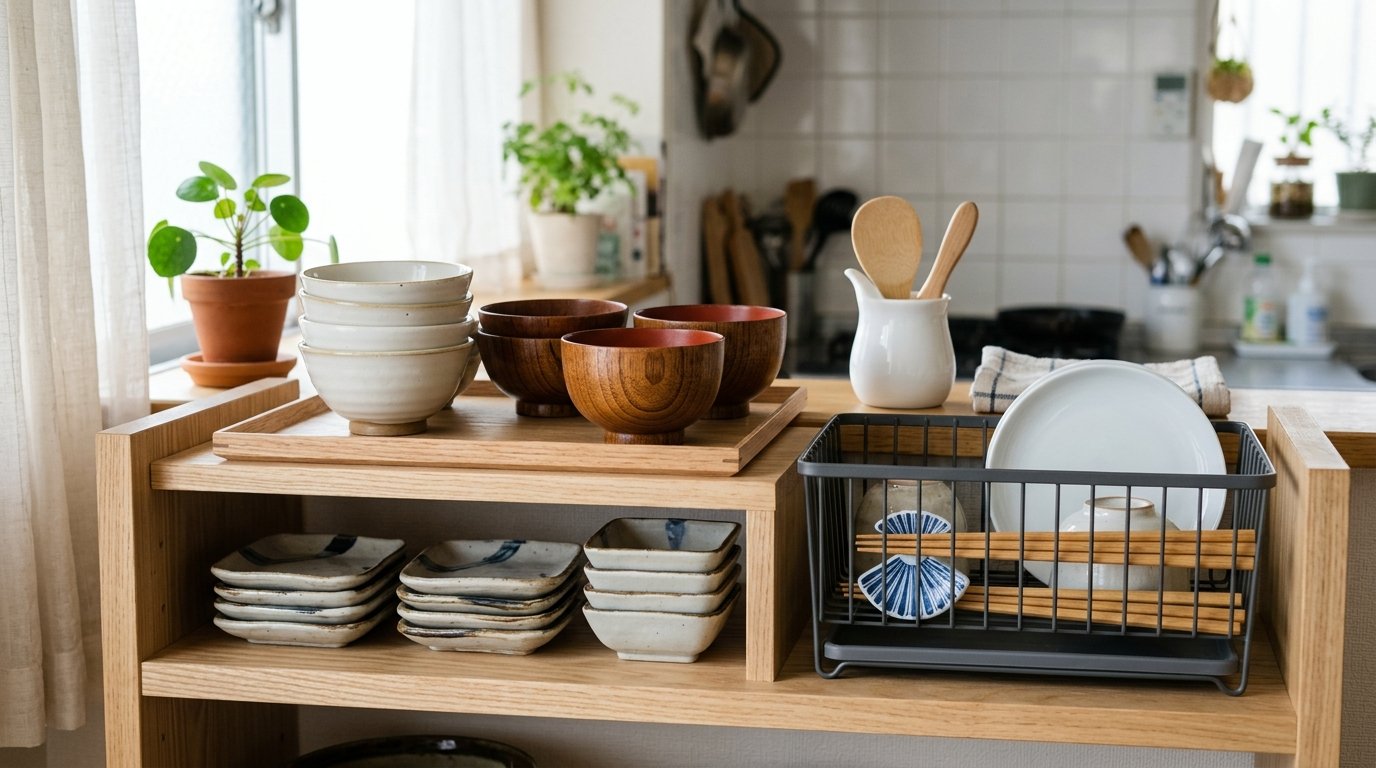
Traditional dining rules shape daily layouts. Positioning the rice bowl on the left and the lacquer soup bowl on the right creates a balanced layout that aligns with everyday Japanese dining routines.
2. Cupboard Storage and Stackability
Cupboard height limits require efficient stackability. Selecting white porcelain rice bowls and wooden soup bowls designed to nest securely together prevents cupboard clutter.
3. Verifying Microwave and Dishwasher Safety
Household routines run smoother when tools are microwave-safe. Always verify that lacquer bowls use heat-resistant resin, and porcelain Small side dish plates support dishwasher heat cycles.
4. Chopsticks and Chopstick Rest Etiquette
Placing chopsticks directly on table surfaces is unhygienic. Using a bamboo chopsticks rest set prevents tips from contacting placemats, maintaining dinner sanitation.
5. Narrow Water-Draining Rack Placement
Oversized drying racks block narrow sink countertops. Placing a slim stainless steel wire dish rack with a moisture-absorbing tray fits tight kitchen edges, accelerating drying.
6. Sourcing Dining Wares
Lacquered bowls, porcelain rice plates, and slim dish drying racks are available at Nitori, Cainz, or Loft. Bamboo chopsticks, chopstick rests, and washable placemats are easily found at 100-yen stores.
7. Connection to Kitchen Cooking Prep
This dining arrangement integrates with our Grocery and Meal Prep Storage Framework, matching serving trays with weekly food prep containers.
EDITORIAL NOTE & DRAFT STATUS
This article is an editorial framework and guide. In accordance with our editorial standards, links will be added after availability and editorial checks.