

1. The Japanese Convenience Store Ecosystem: 7-Eleven, FamilyMart, and Lawson
Japanese convenience stores (konbini) function as essential daily public infrastructure offering financial transactions, document printing, digital logistics, and fresh food alongside retail goods. While 7-Eleven, FamilyMart, and Lawson provide standard foundational utilities, specific services like terminal software, shipping carrier partnerships, and ticketing networks vary by brand.
2. International ATMs: Card Network Compatibility, Withdrawal Limits, and Exchange Considerations
Convenience store ATMs operated by Seven Bank, Lawson Bank, and E-net allow cash withdrawals with many foreign credit and debit cards, but accepted card networks (such as Visa, Mastercard, JCB, American Express, Diners Club, Discover, or UnionPay), withdrawal limits, and service fees vary by ATM operator and the cardholder’s issuing bank. Always check the network logos displayed on the physical ATM and the operator’s official website before inserting your card. When presented with currency conversion options on-screen, selecting Japanese Yen (JPY) means the transaction is settled in local currency with conversion performed by your home card issuer under their prevailing rates, though total charges depend on your individual bank terms.
3. Multi-Copy Machines: Printing Boarding Passes, Vouchers, and PDFs via App & Wi-Fi
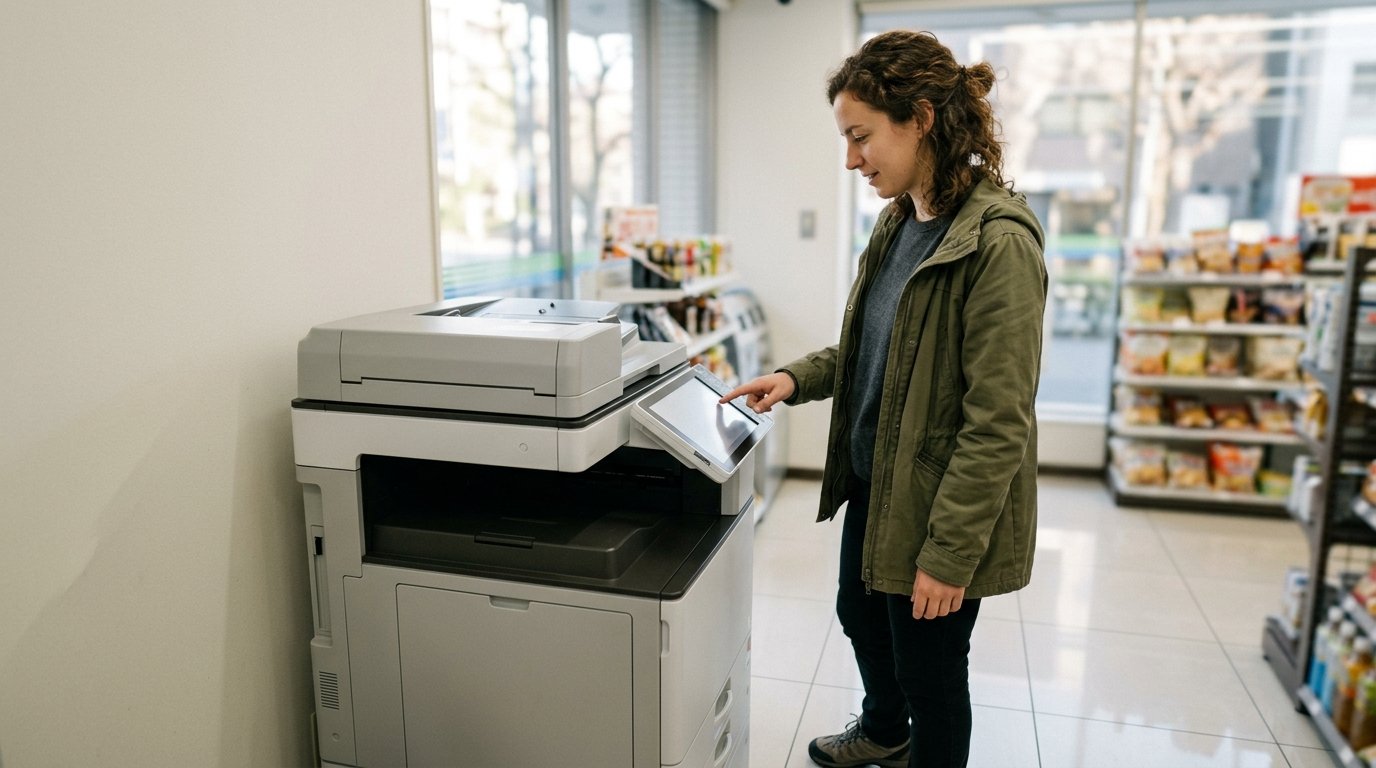
In-store multi-function copiers allow travelers to print PDF boarding passes, hotel vouchers, and passport copies without a home printer. Use the free "7-Eleven Multicopy" app via local in-store Wi-Fi at 7-Eleven, or "PrintSmash" / "Network Print" at FamilyMart and Lawson. USB memory drives and web reservation numbers are also widely supported.
4. Ticketing Kiosks & Event Vouchers: Platform Availability, Slip Time Limits, and Chain Routing
Event tickets, theme park admissions, museum passes, and highway bus reservations booked online can be retrieved in-store only when the ticketing service provider explicitly supports convenience store issuance as a checkout option. At Lawson, customers enter their reservation details at the red standalone Loppi kiosk to print an issue slip, which must be brought to the cash register within a specified time window (often 30 minutes, depending on the service). At FamilyMart, ticketing workflows are integrated directly into the in-store Multi-Copy machine. At 7-Eleven, ticketing pickup codes or barcodes provided by the booking platform are presented directly at the cash register or entered at the terminal depending on the specific vendor agreement.
5. Luggage Shipping and Parcel Services: Carrier Availability, Drop-Off Deadlines, and Receiving Requirements
Many convenience store branches accept parcel and luggage drop-offs through logistics partnerships: 7-Eleven and FamilyMart generally partner with Yamato Transport (Takkyubin), while Lawson partners with Japan Post (Yu-Pack). However, shipping service availability, acceptable luggage dimensions, weight limits, and same-day carrier pickup deadlines vary significantly by chain and individual store location. Waybills (Denpyo) for prepay or cash-on-delivery are provided at the counter upon request. When forwarding luggage to hotels or airport counters, travelers must verify delivery lead times in advance and confirm that the receiving hotel or airport luggage depot accepts incoming unassisted tourist baggage.
6. Payment Methods: Accepted Cashless Options, Terminal Operation, and Self-Checkouts
Many convenience store locations accept cash, major transportation IC cards (Suica, Pasmo, ICOCA), EMV contactless credit and debit cards, and select smartphone barcode payment services, though accepted payment methods and specific card networks depend on individual chain systems and store terminal configurations. On customer-facing registers or self-checkout kiosks, select your intended payment category button on the touchscreen before tapping your physical card, transit pass, or scanning your mobile barcode.
7. Hot Snacks, Steamed Buns, and Fresh Brewed Coffee: Counter Ordering Procedures
Hot fried chicken (Famichiki, Karaage-kun, Nanachiki) and seasonal steamed buns (Nikuman) are stored in heated glass display cases by the cash register; order them verbally by pointing or naming the item. For freshly brewed drip coffee, order a paper cup at the counter or take an iced cup from the freezer section, pay at the register, and brew it at the self-serve coffee machine.
8. Consumption Tax Rates (8% vs. 10%), Restroom Policies, and Store Waste Rules
Under Japan’s consumption tax system, food and beverages purchased for takeout carry an 8% reduced tax rate, while items consumed in a designated in-store eat-in space carry the standard 10% rate; inform store staff at the register if you plan to eat inside. Restroom availability and customer waste disposal bins vary by store; in high-density or transit locations, restrooms and trash bins may be restricted, locked, or unavailable. Always check posted in-store notices, ask store staff if uncertain, and dispose of trash strictly according to the designated container labels.
9. Data Privacy & Loss Prevention: Checking Scanners, USB Slots, Change Trays, and Receipts
Multi-copy machines and ATMs are frequent locations for forgotten personal items. Always lift the scanner cover to ensure your original passport or document is not left behind, safely eject USB memory cards, check the automated change dispenser coin tray, and shred or securely pocket transaction receipts containing personal account details.
10. Practical Japanese Assistance Phrases for Convenience Store Services
Essential everyday phrases help navigate service inquiries smoothly: "Kore o hitotsu kudasai" (One of this, please), "Toire o karitemo ii desu ka?" (May I use the restroom?), "Fukuro wa irimasen" (No plastic bag needed), "Kore de haraimasu" (I will pay with this), and "Mochikaeri de onegaishimasu" (To go, please).
EDITORIAL NOTE & DRAFT STATUS
This information is reviewed periodically. If service or product links are added in the future, they will be published only after availability and editorial checks.