

1. Cooking Oil Management in Japanese Kitchens
Frying tempura, katsu, or karaage is popular in Japanese home cooking. Because cooking oil must never be poured into drains, establishing a clear oil solidifying or straining routine keeps plumbing clear.
2. Product-Label-Based Solidifier Handling and Heat-Off Rules
Always turn off stove burners and move flammables away before handling oil solidifiers. Follow the exact instructions on the product package, as temperature requirements vary between solidifier types.
3. Straining and Storing Reusable Cooking Oil
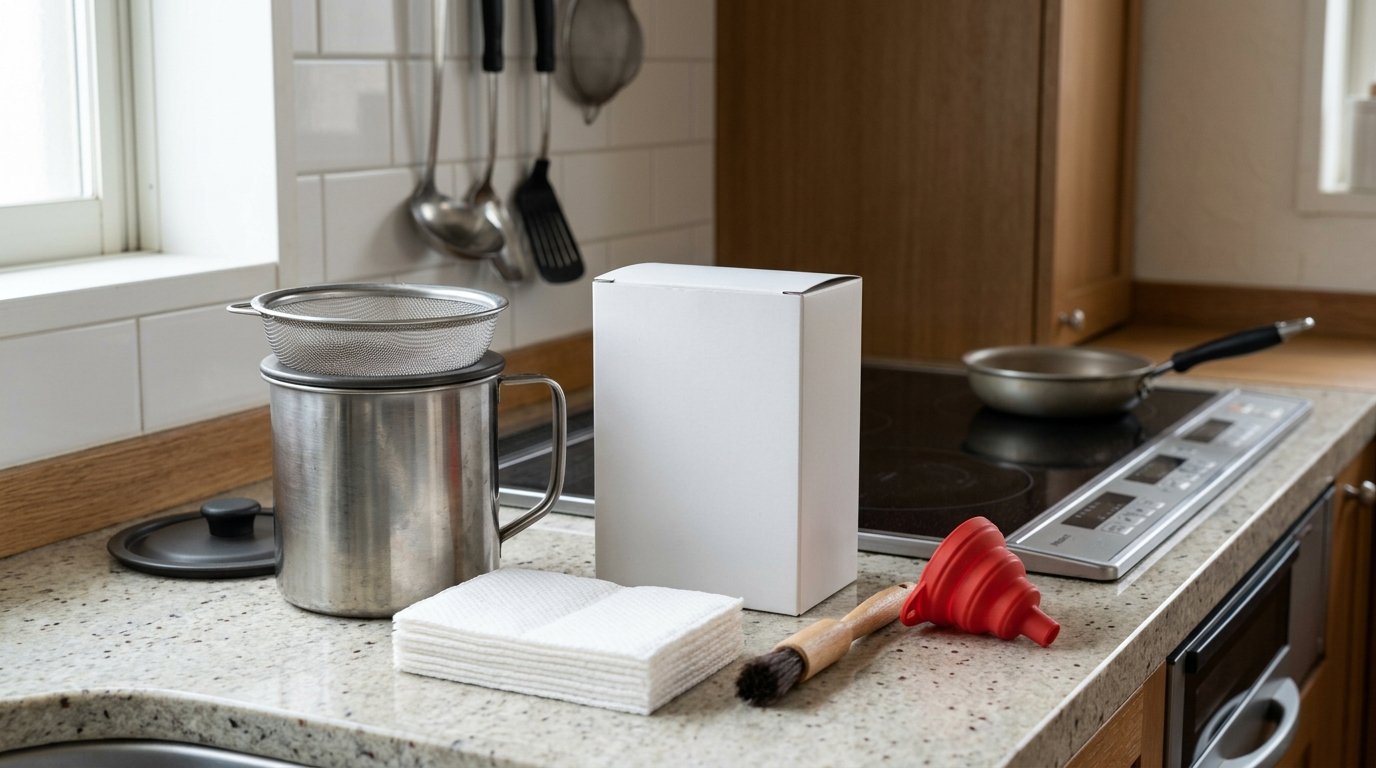
If oil is clean enough for reuse, pour it through a stainless steel oil pot strainer while warm to separate food crumbs. Store the filled oil pot in a cool, dark kitchen cabinet.
4. Absorbent Disposal Pads and Containment Bags
For small amounts of cooled residual oil, absorb the grease into cotton waste pads. Place absorbed or solidified oil into containment bags before adding to burnable household trash.
5. Checking Municipal Oil Disposal Rules
Regulations for burnable waste disposal and resource oil recycling vary by municipality (city or ward). Always check local official waste guidebooks for specific disposal rules.
EDITORIAL NOTE & DRAFT STATUS
This article is an editorial framework and guide. In accordance with our editorial standards, links will be added after availability and editorial checks.